


An overview of the Annual Aerial Umbabat Census and recent anthrax occurrences in the region.
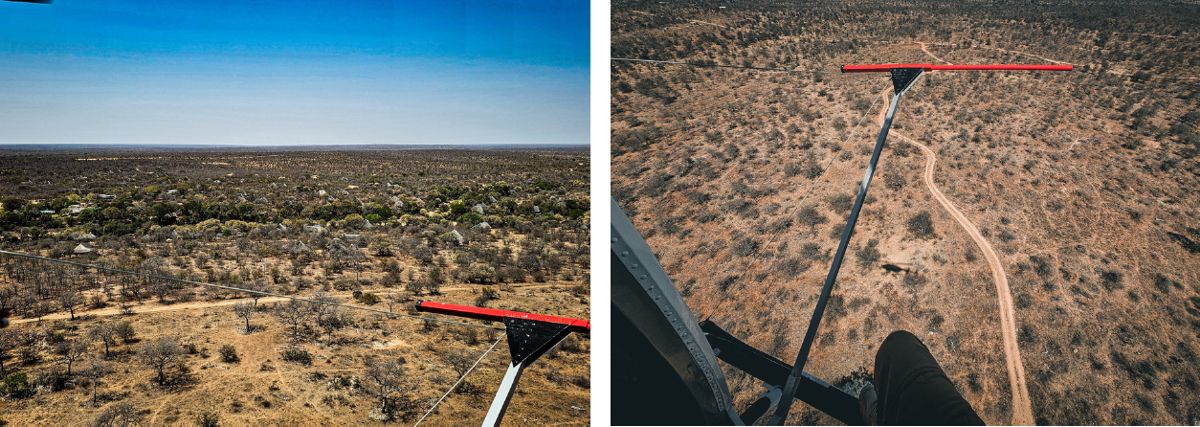
On the 16th of September, our annual aerial census was conducted over the Umbabat Private Nature Reserve (UPNR) via helicopter. The census was successful, with the most notable observations being numerous large herds of buffaloes, giraffes and elephants present within the UPNR at the time. General provisional feedback from the ecologist indicates that impala populations continue to decline, while zebra and giraffe populations seem to be on the rise.
Thank you to all involved in this process, particularly the pilot, ecologist and counters who were directly involved in conducting a successful census. Further, we would like to thank Motswari Game Reserve for the use of their airfield, Ndlopfu Private Game Reserve for accommodating the pilot and ecologist, and Ingwelala Private Nature Reserve for assisting with the aerial count. We intend to do a predator census for the UPNR in October.
In regional news, an increase in the outbreak of anthrax cases has been observed regionally in recent months. The initial outbreak originated in central Kruger National Park and is slowly moving westwards towards the Associated Private Nature reserves (APNR). Kudu and buffalo populations seem to be the most affected at this time, while predators and other animal may also be exposed.
Anthrax is a contagious disease which is naturally occurring and forms an important part of the natural balance in the bush. Being seasonal, outbreaks usually increase during the dry winter months and generally dissipate with the onset of the rainy season. Although rare, the disease can affect humans and domestic livestock, and as such it is classified as a controlled disease even though it is naturally occurring. Accordingly, all potential cases of anthrax are treated with the utmost care and attention, and with the appropriate precautions in place.
Being a controlled disease, it is important that we not only report all cases to the relevant authorities but also try to curb the spread of anthrax - particularly to stop it from spreading further west towards high densities of people, communities and livestock. As such, all carcasses that are suspected to have anthrax will have tissue and blood samples taken, and immediately thereafter will be destroyed appropriately to avoid other animals or humans encountering them. Samples are analysed by State Veterinarians, with the authorities and state involved throughout the duration of the process. The UPNR wishes to assure all stakeholders that it is actively monitoring the situation, in line with best practices and regulatory guidance.
Anthrax is spread via direct contact with the disease-causing spores, either via ingesting the spores (e.g. a kudu eating infected leaves, or a predator or human ingesting undercooked or raw meat/blood from an infected animal), by inhaling the spores when in close proximity to an infected animal, or via contact of the spores with an open wound (e.g. touching infected blood, meat or bones with an open wound). It is therefore essential that the utmost care and precautions are taken when near any suspected anthrax carcass - and why the timeous reporting of any suspicious carcasses is vital. We must make every effort to minimise exposure of both wildlife and humans to prevent the disease from spreading further.
Although cases in humans are rare, below are the most important things to know, especially if a carcass is found that may look suspicious:
- Do not approach, touch or handle any carcass or any part of a carcass, including bones.
- Report the carcass to management immediately, with as accurate of a description as possible (e.g. accurate location, species, are there any predators in the area, any suspicious signs on the carcass - see indicators to look out for below).
- If other people are present, inform them not to approach or handle the carcass.
- Leave the area, unless asked to remain at a safe distance by management.
Below are some of the indicators of an animal that has died from anthrax:
- Foam at the nose and/or mouth.
- Bleeding from any orifices, particularly the ears, nose and eyes.
- Neck and head outstretched backwards towards the rump.
- Absence of any predators/signs of feeding may be an indicator, although predators may still feed on an anthrax-infected carcasses.
It is also possible for predators to show signs of anthrax while still alive. Signs of anthrax in lions includes swelling of the mouth, lips or head, and blackened or blistered areas of skin on the head and face that look like burn scars or wounds. If any predator is suspected to have anthrax, please report it to management immediately and if possible, stay with the predator until management arrives to assess the situation and alert the relevant authorities.
Although most carcasses will return a negative result, we cannot afford to take any chances, and as such every carcass that is suspicious is treated as a potential anthrax case and will be dealt with accordingly and as per the state protocols in place. Because of the potential risk to humans, livestock and other wildlife, including protected species, it is vital that we monitor the spread of the disease and, if possible, curb the spread of it as much as we can.
We would like to request that all predator sightings are reported so that each animal can be evaluated for any potential signs of anthrax. Reporting will assist us greatly with monitoring, and we appreciate your cooperation in this regard. We would like to thank the Ingwelala Members who reported a suspicious kudu carcass timeously, which allowed us to destroy the carcass as quickly as possible and before any other animals had the opportunity to feed on it. Thanks to the vigilance of those Members, and Ingwelala Management who responded so quickly, a positive anthrax case was dealt with in an efficient and timeous manner, which, as of now, remains one of only a few reported anthrax cases within the APNR.
We continue to encourage caution in this regard, and the timeous reporting of all predator sightings for a welfare check to be conducted as quickly as possible. Our top priority in this regard is the safeguarding of both wildlife and human health. Thank you for your assistance.
Words by Tess Woollgar. Images courtesy of Josh Hibbett.