


March was a productive and busy month in preparation for the upcoming busy long weekends and school holidays.
Repair work on roads continued, while temporary repairs and some upgrades were carried out at the main causeway. In camp, water conservation, malaria spraying and trimming of vegetation alongside the roads were the top priority.
Weather conditions throughout the month were mild, with mornings beginning to feel cooler towards the end of the month. Humidity, however, was at an all-time high, with many days recording a humidity of over 80%. The veld remained lush and green, with significantly higher-than-average rainfall throughout the month contributing to the extended flow of all rivers.
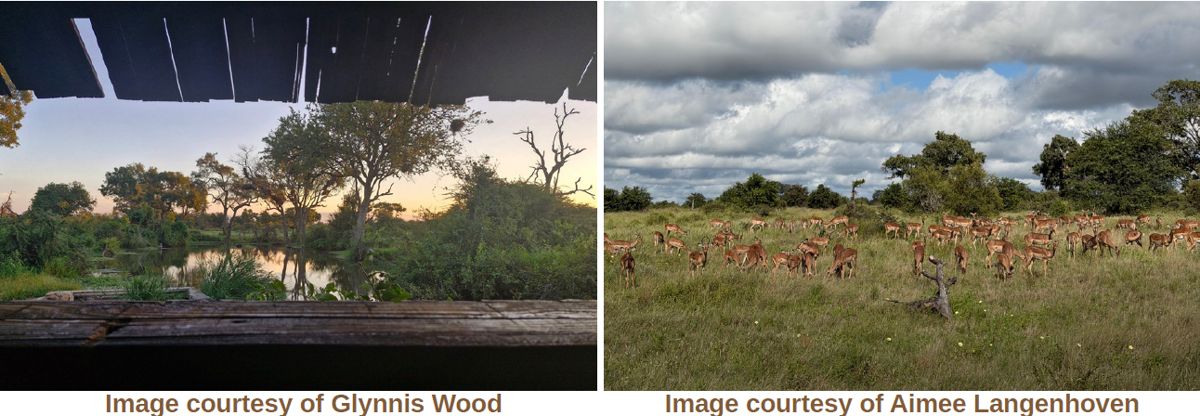
Sightings during the month were truly outstanding, with some wonderful rarities recorded by Members.
For your interest, a summary of our climactic figures from the month is below.
 Lowest Temp: 18.0°C (Avg: 21.7°C)
Highest Temp: 42.8°C (Avg: 29.9°C)
 Rainfall for the month: 149.4mm
(Avg: 45.0mm)
Year-to-date (July to June): 1,189.8mm

 Fire Danger Index: Dangerous*


*FDI: With exceedingly high biomass following the heavy rains, and unpredictable wind gusts, the Fire Danger Index remains high despite the green veld conditions. Please remain cautious.
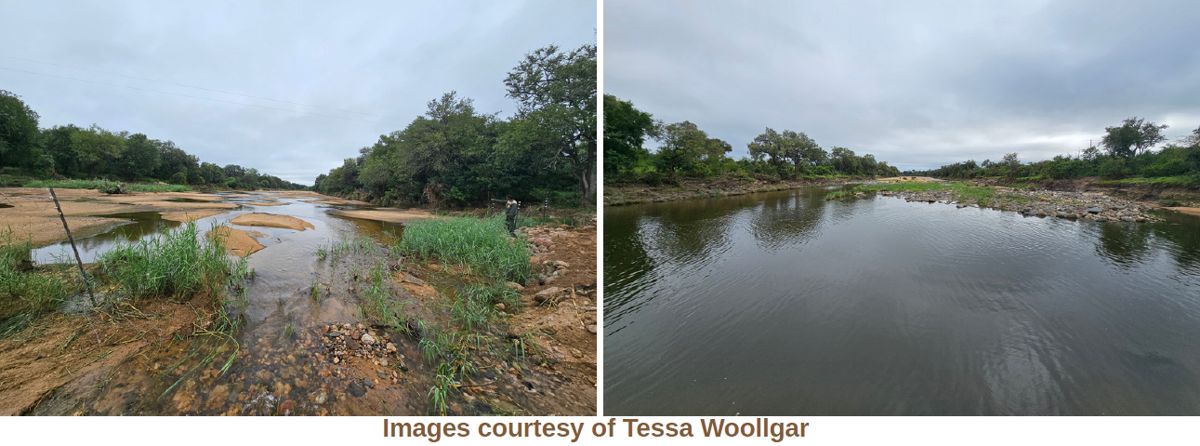
Road repairs continued
Much progress has been made with road repair works at Ingwelala over the course of the month. The WBHO team departed this month, after many weeks of hard work, and despite the rainfall measured during the month, road conditions have remained stable. Efforts were focused on maximising traversing on the reserve, continued assessment and spot-repairs, and the continual upkeep of the roads in camp - particularly on Ingwelala Drive, where vehicle traffic is high. The rolling compactor, pictured below, has been of particular use on camp roads.
Currently, most of the reserve is open for traversing, but river crossings will remain closed until the riverbeds have dried sufficiently to be able to bear the weight of vehicles. Trimming of vegetation on the road verges in camp has also been of high priority, with multiple roads having been completed and efforts continuing. In the month ahead, we plan to focus extensively on Op Goedehoop’s roads, where heavy machinery has not been able to access much of the road network because of the existing topography and vegetation.
We thank you for your continued patience as we move from one priority to the next and extend a final thanks to the wonderful WBHO team for their assistance this year!

Malaria spraying and updated emergency fire drill procedure
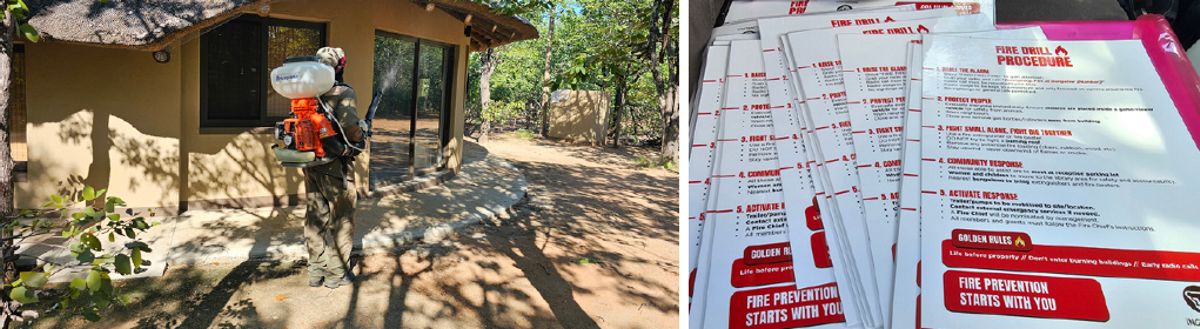
With the unprecedented rainfall measured this season, it is likely that malaria spraying may have to be conducted more frequently this year, should saturation levels remain high and environmental conditions require it. Our first annual spray is almost completed, with most infrastructure having been sprayed in anticipation of the busy April period and following the rains at the beginning of the month.
Please note that during this spraying period, each sprayed bungalow has been issued with an updated document of the emergency fire drill procedure, which can be found in each bungalow’s kitchen.
Please take note of the updated emergency fire drill procedure, as safety is of top priority at Ingwelala. We thank you for your attention to this document. Fire prevention starts with you!
Water conservation
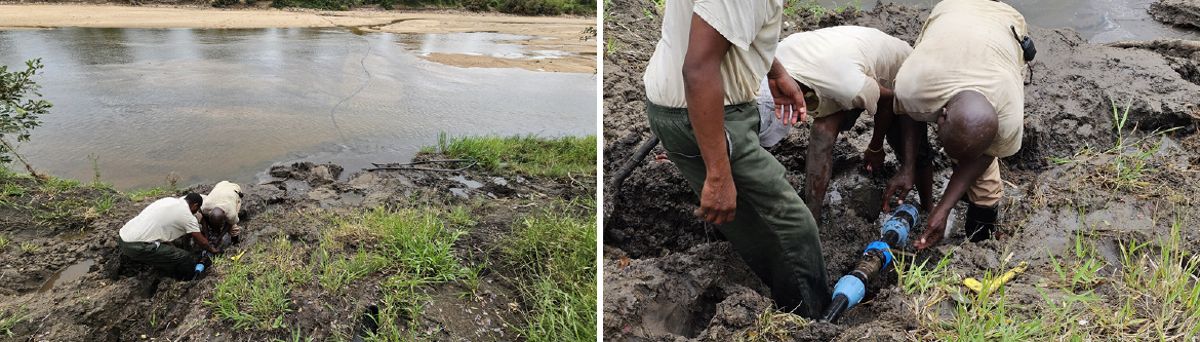
Throughout this year, water conservation has presented some unusual challenges for our team, as most of the borehole pump supply pipes were washed away during the flooding and are still only accessible on foot. Beginning with only one intact borehole supply line to camp following the floods, the team has managed to successfully restore all water pipes that provide water to camp. This has allowed the water supply in camp to remain fairly stable throughout the period following the flooding.
Despite the challenging conditions, particularly in areas where the supply pipes are more difficult to access, water conservation is still of top priority at Ingwelala, and any water leaks that have arisen during the year have been identified and repaired quickly.
We thank you for your patience, understanding, assistance and continued support in this regard.
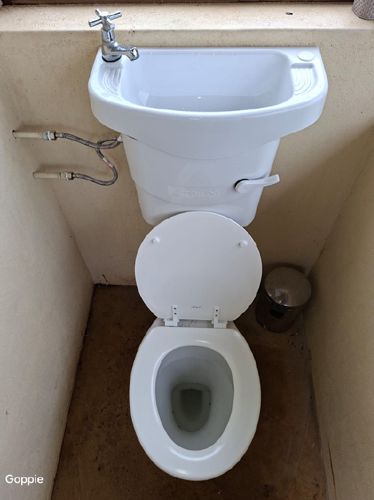
Trimming and repairs at the bomas, hides and viewing sites
With the substantial vegetation growth following the rains, the various bomas, hides and viewing sites have been undergoing more extensive damage assessments, and ongoing repairs and upgrades.
This includes trimming of vegetation at larger sites, such as Argyle Boma, as well as the repairs and replacements of various items damaged during the prolonged rainfall. Elephant Pan Hide and Bird Hide have also been fitted with replacement Eco-Loo toilet facilities.
Although all facilities are once again open and functioning, there are still repairs and replacements to be carried out at various sites, including more extensive vegetation trimming prior to the winter months, some erosion control and road repairs, repainting of surfaces, trimming around smaller sites, and the continued replacement of select restroom facilities.
We thank you for your patience as we continue with these repairs and upgrades.
Snake relocations and removals
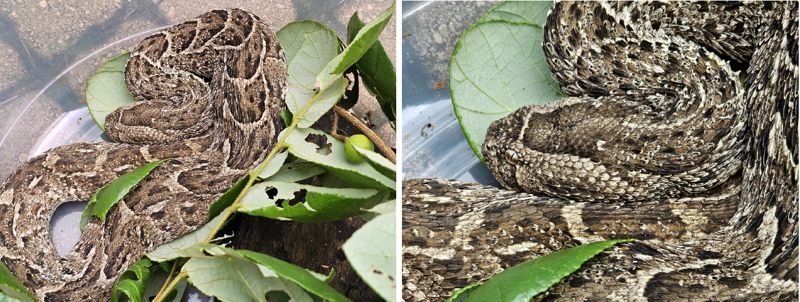
With a steady increase in reptile sightings and encounters, snake relocations were once again common practice during the month. Along with this, there were also regular callouts to check for suspected snake activity in and around bungalows.
A particular highlight was the relocation of a very large Puffadder, measuring roughly 1.2m in length, which was removed safely from the entrance gate after being spotted near the staff housing facility.
With the increased rainfall this year, please be reminded that snake encounters will likely increase as winter approaches due to increased food availability and expected cooler temperatures during the approaching colder months. In this time, snakes may seek shelter or food in and amongst buildings and infrastructure in camp and on the reserve.
We encourage extreme care and caution in this regard. Please do not hesitate to contact us for safe removals and relocations - it is one of our favourite activities, and we are always willing to assist!
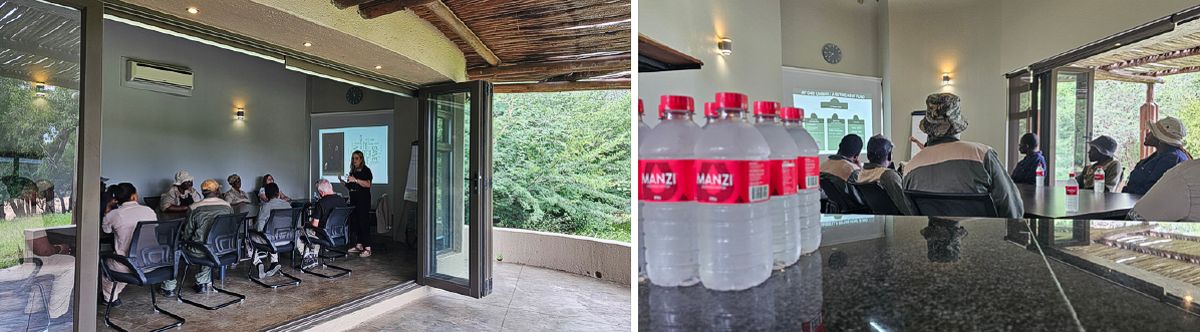
Staff training: Provident Fund
As a core focus at Ingwelala, upskilling of staff remains of top priority. During the month, the fund manager for our providers fund provided follow-up, on-site training for all staff regarding the Two-Pot System, saving for retirement, understanding retirement and provident funds, and managing savings and accessibility for a more comfortable retirement.
The representative very kindly made herself available to all staff for one-on-one consultations and follow-up questions after the group training sessions, allowing for those who wished to gain a more personalised, private experience to be able to do so.
We would like to thank Janine Coetzer for providing Wonderyears training for all staff, and to all who assisted with logistics and organisation.
Staff members of the month
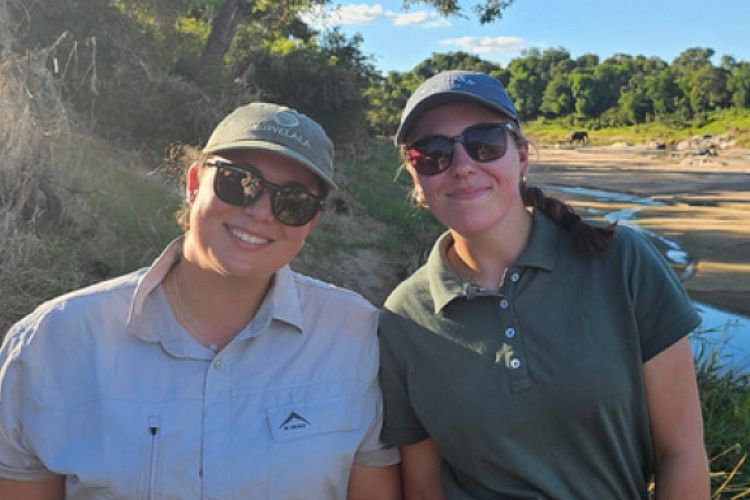
There is no doubt that the new conservation students, Aimee and Tegan, have been introduced to Ingwelala at a particularly good time to be learning new and extensive field-based skills.
We would like to honour them this month, as they have learned to conquer all manner of tasks in a very short space of time, including electric fencing, water reticulation and water leak repairs, malaria spraying, road repairs, erosion control, Member relations, administrative skills, animal interventions, and more.
They have been immensely productive and helpful - and a wonderful asset to the team!
Thank you, ladies, for your hard work!
Notes from the conservation team
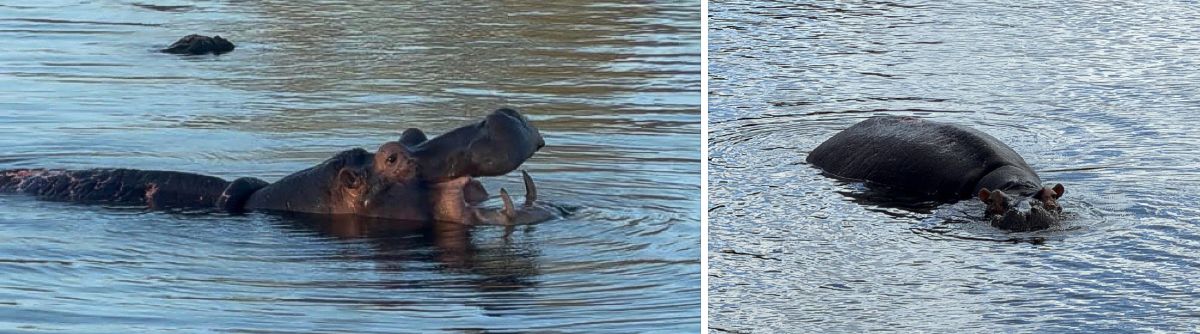
In the interests of safety, please be advised that there is a hippo bull who is frequenting the Member’s Area at night. He has also been seen in the riverbed in camp during the day. This is likely the same bull who has taken up residence in the water at the main causeway and is in the process of exploring the area in camp and establishing a territory.
Hippos are notoriously dangerous, especially at night, when encounters are more likely to be on foot and away from water. We encourage extreme caution in this regard, especially in the vicinity of Reception and the bungalows near to the river and causeway!

Building Projects
John Llewellyn, represents the Building Committee at reserve level regarding all building related issues to members bungalows. Members are welcome to call Reception ahead of their visits to enquire what building related disturbances may be encountered in the vicinity of their bungalows.
Current (major) building projects are listed below:
- Bungalow #9: Chameleon Builders; Internal renovations.
- Bungalow #160: Chameleon Builders; Thatch comb and patch.
- Bungalow #207: Chameleon Builders; Internal renovations. BM Thatchers; Re-thatch and internal renovations.
Words by Tess Woollgar. Images courtesy of Tess Woollgar, Josh Hibbet, Ruan du Preez, Caroline Culbert and Aimee Langenhoven.