


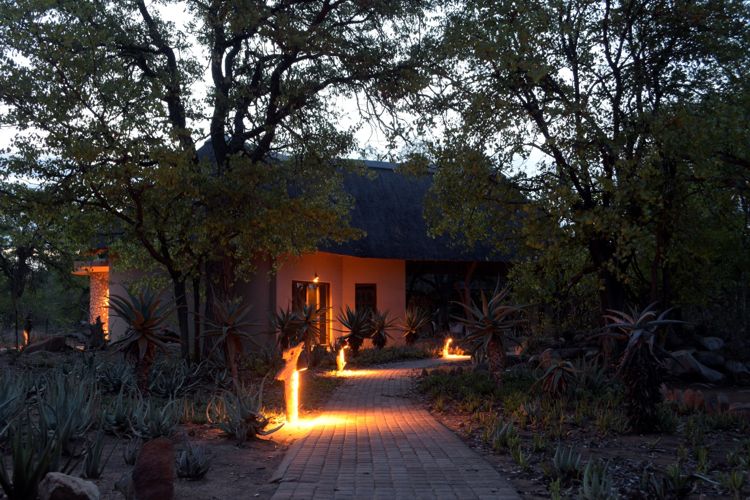
Winter is certainly now well upon us as the milder May temperatures have been replaced by the colder nighttime and early morning weather of June, with the winter sunsets spectacular as always.
Temperatures in this reporting month dropped as low as 5 degrees Celsius with a maximum daytime of 35 degrees Celsius. Rainfall was again minimal, as expected, and measured at 2 mm.
The fire break preparation continued in June as we completed the Member’s units and progressed through to Vuka Ingwe, management housing, Member’s areas, hides, and bomas. This is now 100% complete.
Conservation responsibilities and work tasks in this reporting period followed along the same lines as in recent months. Electric fence maintenance is a critical part of this with the many components of the new fence structure requiring constant checking, assessing, and maintenance where required. The large majority of the fence repairs are due to buffalo and impala. However, there was a disturbing moment mid-month when a routine morning inspection revealed an elephant bull’s attempt at breaching the fence had partially succeeded. On closer inspection it was discovered that the animal had managed to circumvent the ‘spines’ and had managed to get its tusks under the 3-live strands. I believe at this point, judging from the tracks, the pulse from the energizer delivered a shock that caused him to backing off and leave the area. This section was repaired the same day. Elephant attempts to breach the fence and elephant activity adjacent to the fence remains high.
The trenching for the new pipeline for the water supply to Elephant Pan has commenced, this will continue into July. The existing 40 mm pipe is an old pipe in a poor state of disrepair following the numerous occasions that elephants have damaged it.
Road maintenance and attention to the river crossings continued as prioritised. Now that the water table in the Nhlaralumi has receded slightly, it will allow for more substantial repairs in the coming months.
Water leaks and the aging underground infrastructure is increasingly more apparent as we continue our efforts to repair and attend to water leaks
by Chris Mayes