


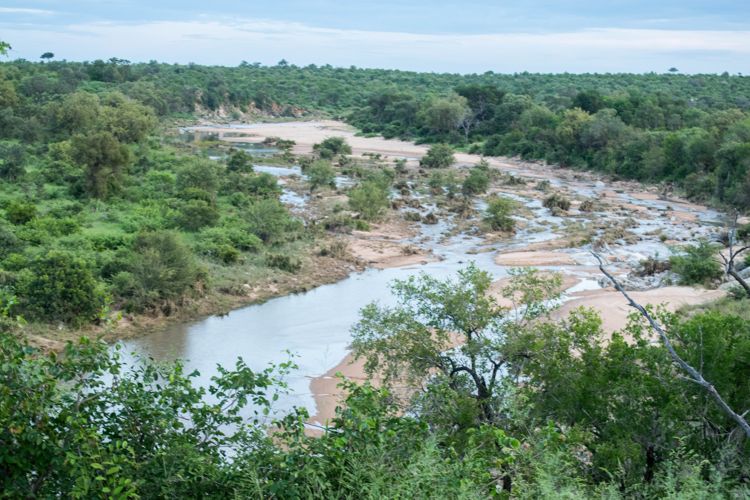
The introduction to the previous report alluded to the scarcity of rainfall in this summer to date, this may be the perfect opportunity to revise that sentiment!
February 2023 produced the second highest rainfall, 346.2 mm, recorded for the month of February, at Ingwelala; February 2000 being the highest ever with a mammoth 425 mm!
There were two distinct weather patterns responsible for these excessive rains. A cut-off low was stationary above the North-eastern parts of the country from early February through to mid-month. This was responsible for the bulk of the moisture. Towards the end of the month, we were anxiously anticipating more rainfall with the imminent arrival of Cyclone Freddy. To our relief the system moved more north of its projected path, and the effects were severely diminished in our immediate area. Nonetheless, the fringes of this system brought significant rain which in turn had all the river systems flowing strongly.
Cyclone Freddy was an interesting phenomenon and was observed with interest as it continued to make its way across the Indian Ocean from its origins in southern Indonesia. It progressed and intensified during its westerly bearing through the Indian Ocean. Weather forecasts at that stage were uncertain of where Freddy would make landfall in Africa. However, 19 days and 8000 kilometres later, the system made landfall in the vicinity of Vilanculos on the east coast of Mozambique. It was subsequently established that this is the longest travelling cyclone thus far recorded in the southern hemisphere. As a matter of interest, and comparison, the current record is held by Hurricane John, which lasted 31 days in 1994, and affected Hawaii, Johnston Island, and Alaska in the US.
At the time of writing (09 March) Cyclone Freddy remains active and is 220 kilometres northwest of Europa Island and is forecasted to make landfall along the coast of Mozambique by 11 March.
Consequently, the excessive rains resulted in material damage to infrastructure such as roads, river crossings, fences, and water reticulation. The Insurer is informed. Restoration is work in progress. Thank you for your patience and understanding in this regard.
Work was completed on the renewable energy project; the solar pump installations at borehole # 6 and Jackalberry were completed.
The current outbreak of caterpillars is due to this species:
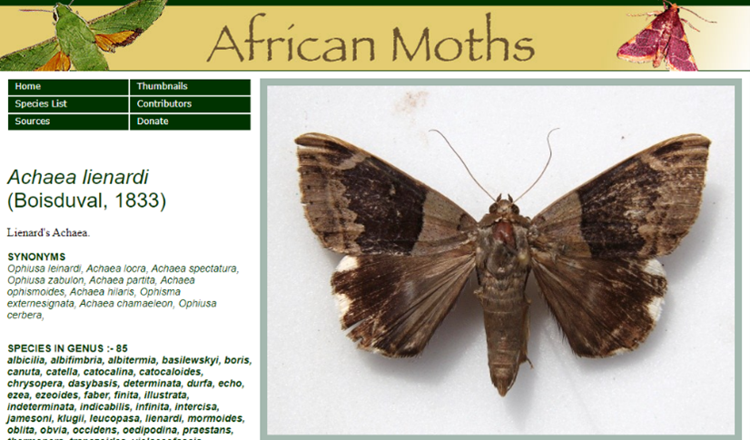
by Chris Mayes, photo courtesy Ingrid Passier