


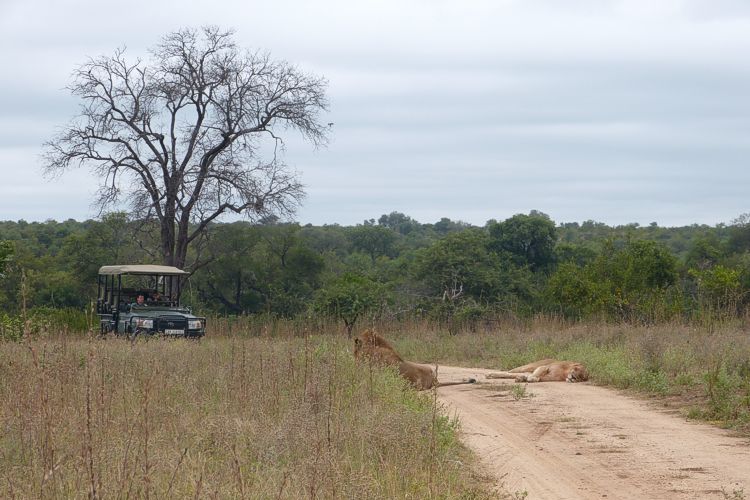
We had a wonderfully busy month of April celebrating the school holidays and Easter long weekend with plenty of Members in camp.
We had a wonderfully busy month of April celebrating the school holidays and Easter long weekend with plenty of Members in camp. The reserve was overflowing with activity, sightings were phenomenal, and the events hosted were a swinging success!
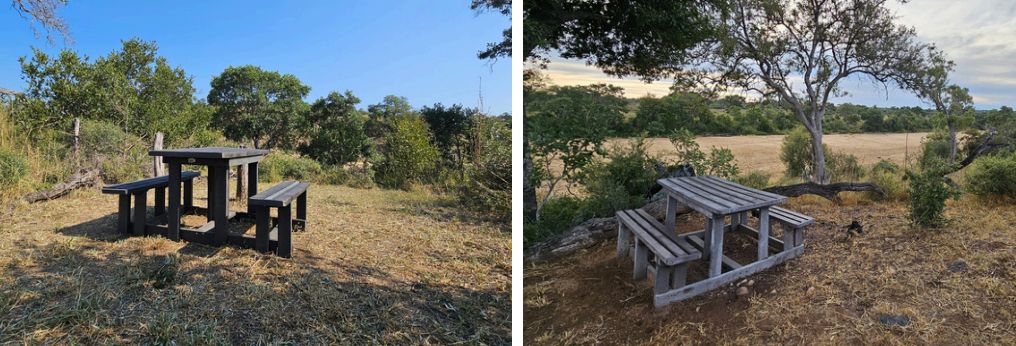
Main events for the month included a Members versus Staff soccer match at Vuka Ingwe, an informative presentation on technology in conservation, and a live and interactive session on snakes and scorpions! We also completed a full re-build of the structure at Aloe Ridge and gave the vegetation around all the bomas, hides and sites a trim for safety.
Having started the month with a flowing river, the veld is still green with pools of water visible in the riverbeds and plenty of mud wallows around. Our Fire Danger Index is at the “Moderate” level and biomass is extremely high. We continue to encourage you to be cautious when making fires.
 Lowest Temp: 12.8°C (Avg: 18.6°C)
Highest Temp: 33.9°C (Avg: 29.6C)
 Rainfall for the month: 2.5mm
(Avg: 26.2mm)


Projects of the month:
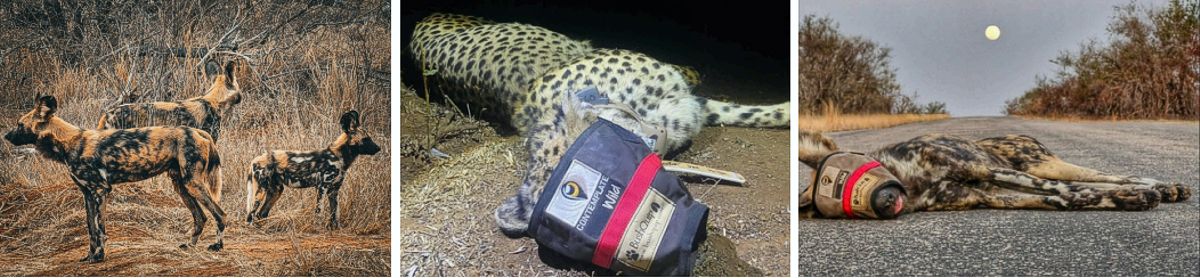
Technology in Conservation: Contemplate Wild
On Friday the 18th of April we hosted Grant Beverley, from Contemplate Wild, in our Members Area. Grant has been studying African Wild Dogs for many years and has used his experience with this endangered species to create an organisation focused on safeguarding both our endangered species and their habitats using technology and live monitoring.
Contemplate Wild is a new non-profit conservation organisation that has been running for just over a year. The crux of their work revolves around offering technological expertise to support conservation efforts and integrate the use of technology and science with practical conservation applications - such as their live monitoring platform that sends real-time alerts when a GPS-tracked animal stops moving or enters a high-risk area. The organisation also assists with rapid and vital veterinary assistance and resource management on the ground.

For this project to work, animals are fitted with tracking devices such as GPS collars or ear tags, which relay the information into the system for analysis. Once the data is uploaded automatically into the system, algorithms search all the incoming data for the pre-set “flags” that would alert people on the ground should anything be of interest - for example, an animal entering a pre-determined “high-risk” area (an area where threats such as snares, poisoning or poaching, etc. are more common and which are geo-mapped to interact with the tracking data), or even an animal not moving out of an area for a period of time which may indicate it may be in need of assistance. In 2024, over 1000 animals of various species were fitted with GPS tacking devices across multiple reserves, including the Kruger National Park, as part of Contemplate Wild’s ongoing research and work to safeguard different species and study inter-species relations and interactions. Examples of “high-risk” areas include areas close to boundary fences, borders, highways, mines or any human settlements.
Other than the live monitoring of animals, Contemplate Wild has also come up with an emergency-alert GPS tracker for field rangers to use when they are out in the field. This tracks each field ranger in real-time and enables them to press a panic button should any emergencies occur. This has resulted in a faster response time to emergencies, saving the lives of animals and humans alike! This is a vital addition, as the terrain field that rangers work in is not always conducive to radio or cellphone signal, making this a much more reliable method of locating field rangers more easily and being able to be alerted when there is an emergency where this may not have previously been possible.
Thank you so much to Grant for taking the time to come out and share this amazing technology with us and thank you to all the Members that attended and got involved.
Trimming Trees
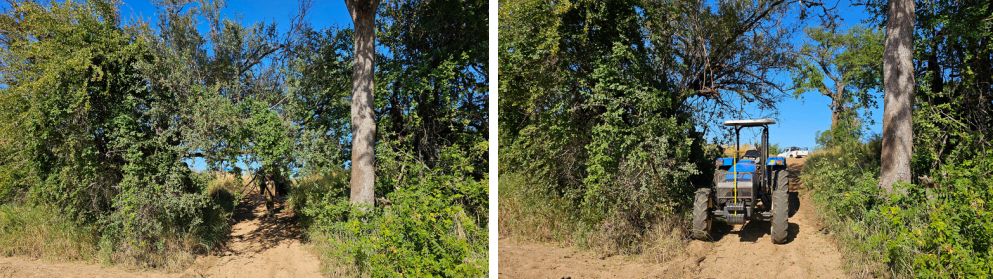
Following such an immense amount of rain this year, the vegetation has grown incredibly quickly. This is especially prominent along road verges on the reserve and around solar panels in camp.
This month we had plenty of Job Cards to trim tree growth away from Solar Panels and spent a lot of time trimming trees and branches away from the road verges. Although we always do this, it has been particularly challenging this year considering the amount of growth following the substantial, extended rains for the past four months.
We thank you for your patience as we continue to trim along the road verges, and a special thank you to all who have reported the larger fallen trees that needed to be trimmed back.
Electric Fence
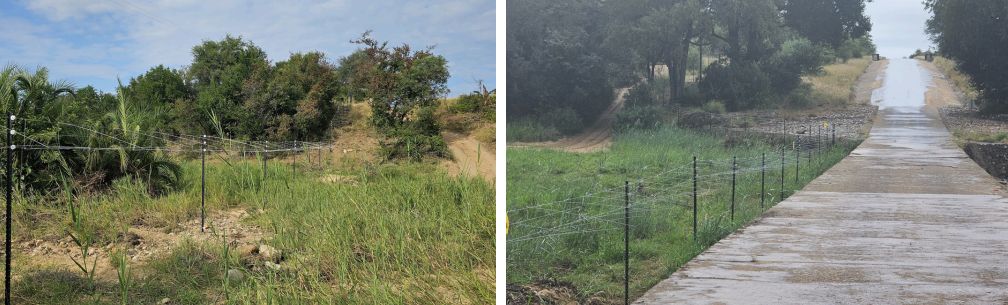
Following the flash flood on the last day of March, this month started off with flowing rivers and two stretches of washed away fence-line in the Nhlaralumi river crossings. While the remainder of the electric fence was kept functioning by the overhanging floodgate wiring, we had to wait until the water levels had dropped to the point where we could repair the fence in the river crossings safely.
The two sections of the fence were fully replaced over a two-day stretch, with the assistance of the Maclin Fencing team, and we would like to extend our sincere gratitude to them for their help. We would also like to thank N’tsiri Private Game Reserve and their TLB operator for their assistance in removing debris from the main causeway to clear space for the fence work to be completed.
During this time following the rain, we also spent time clearing grass and vegetation away from every fence post to optimise efficiency.
Bomas, hides and Viewing Sites
During the past four months we have experienced over 430mm of rainfall at Ingwelala. This has naturally encouraged an immense amount of vegetation growth on the reserve and in camp, including around all the bomas, hides and viewing sites, and on the road verges across the reserve. While we try to trim this vegetation back on a regular basis, year-round, this season has been particularly challenging with the delayed and plentiful rains.
It once again became necessary to give the bomas, hides and sites another clear after the most recent rains in March, so the Conservation team worked hard visiting every site to ensure the grass and other vegetation was neatly trimmed back around the various benches and sites. We are hopeful, moving towards winter, that the vegetation will begin to thin out in the coming months, as we shift our focus towards winter firebreak clearing around all infrastructure in camp and along the fence-line.
Snake Removals
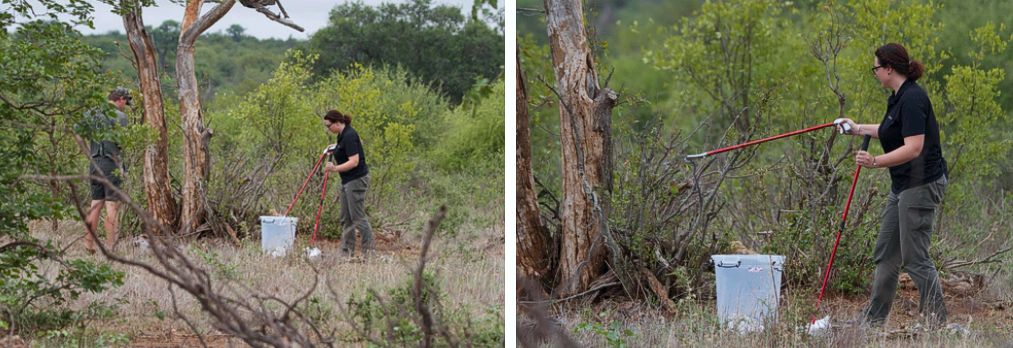
The past few months have been increasingly busy with snake and scorpion removals from bungalows. Snake removals, in particular, have been a regular occurrence. The most common species removed have been Mozambique Spitting Cobras and Black Mambas, and most of the time they have been removed from the thatched roofing (between the wire mesh and thatch on the underside, outside of the bungalows), or from geysers and geyser plates. It can be a tricky process to safely capture and relocate a snake, especially when roofing and geysers are involved, and it tends to take time as well.
We would therefore like to thank the Members who have asked us to remove snakes - we appreciate the calmness and patience all of you have shown as we negotiated our way around the obstacles to safely capture the snakes and keep them calm during the process. We are happy to report that all captured snakes were safely released! As a reminder, the most helpful action you can take with a snake is to keep an eye on it until we can get there!
Savanna Biome: Veld Rehabilitation
During the month we continued our veld rehabilitation project aimed at conserving the savanna biome at Ingwelala. This involves actively managing savanna areas by thinning out Grewia plants, which are aggressive encroachers, as mentioned in previous reports.
We are well over half-way with the project, having completed the areas we intended to do on Argyle and in camp, as well as a few of the more overgrown areas on Buffelsbed. Although we had anticipated finishing our veld rehabilitation project during this month, with the upcoming busy school holidays we decided to delay the final few hectares until May when the busy season has ended. This has allowed our team to be able to focus on various other projects on the reserve and in camp, including the Member events, verge trimming on the roads, maintenance on the river crossings and maintenance of the various bomas, hides and sites on the reserve.
The Bush Clearing team will be returning in May, during which time we will return to the outstanding few areas on Buffelsbed (including the area north of Mermaid Crossing towards the pan) and the open area near the Platform, amongst a few others. We would like to thank you once again for your patience through the duration of this project!
Update on Invasive Plants
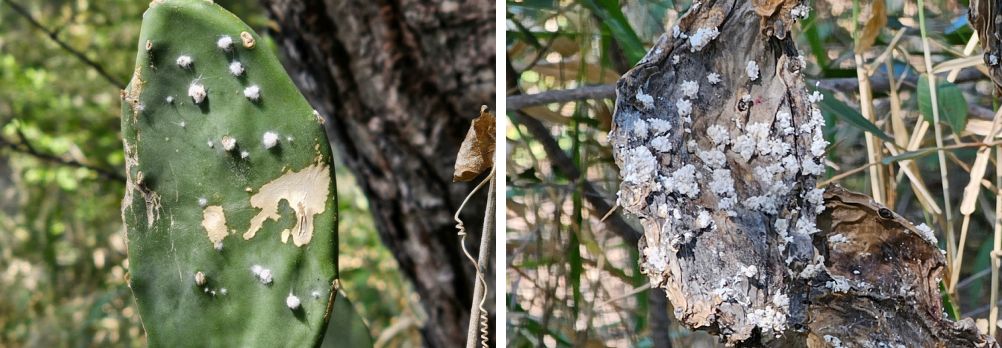
We are thrilled with the progress of our invasive plant control project at Ingwelala. Over the past year, plenty of Prickly Pears (Opuntia species) and every known Queen of the Night (Cereus jamacaru) plant have been treated with biocontrol agents to control the infestations. We are incredibly happy to report that all Queen of the Night cacti have responded exceptionally well to treatment, with most having died off completely and no new plants identified to treat, and the Prickly Pears have also been dying off in huge numbers.
This will be an ongoing project as we continue to target any new infestations of Prickly Pears that are discovered, using the same biocontrol agents that we can harvest from the dead or dying plants. For comparison, Images 1 and 2 show a steadily dying Prickly Pear that was treated previously in comparison to a newly treated Prickly Pear at the same location. It is easy to see the change in colour of the Prickly Pear once the biocontrol agent has established itself, and we are happy to see that the newly treated plant is establishing a healthy population of Cochineal.

Our Staff Member of the Month
This month we have Abednigo Gumede as our Staff Member of the Month.
Abednigo is part of our dedicated Workshop team, and his key role is the preparation and cleaning of all Game Viewers for Members’ arrivals. He also assists with the reparation of damaged and flat tyres.
Abednigo had an incredibly busy month making sure all vehicles were ready for our busy season, which was no small task, and which he did spectacularly!
Abednigo has been at Ingwelala for 28 years and is always hard-working, dedicated and passionate. Thank you for all your hard work, Abednigo! We appreciate you!
Building Projects

John Llewellyn, represents the Building Committee at reserve level regarding all building related issues to members bungalows. Members are welcome to call Reception ahead of their visits to enquire what building related disturbances may be encountered in the vicinity of their bungalows.
Current (major) building projects are listed below:
- Bungalow # 5 Dannhaus Builders, Approved Dec 24, rethatch, internal renovations, new gazebo.
- Bungalows #57, #123, # 163 still in progress, all Chameleon Builders.
- Bungalow # 129, Rethatch, internal renovations and new fire pit.
- Bungalow # 158, Dukes Construction, approved Feb 24, demolish and rebuild.
- Nyala house: Mpumalanga Roofing & Projects; Duke’s Construction; Complete roof replacement and internal renovations.
Notes from the Conservation Team
We want to thank everyone for the immense support and enthusiasm for the events hosted over the long weekend at Ingwelala. We were absolutely blown away by the sheer number of Members who got involved, and the overwhelmingly positive atmosphere! Thank you all so, so much. We are truly grateful for the support shown to our local conservation organisations and our staff members.
A special thank you once again goes out to the anonymous Members who donated camera traps and an artificial nest to the APNR Ground Hornbill Project - they have asked us to please pass along their gratitude once again. We will be placing the artificial nest on Ingwelala, close to the active natural nest on Argyle, in the coming months. Although the birds were not successful this past breeding season, we are hopeful that the addition of the donated nest will aid them in the coming season, should they choose to use it.
If you would like to get involved with any local conservation organisations, or would like information on any of them, please don’t hesitate to contact us. This is also applicable if you want to find any organisations that work with a particular species or within a certain field. The support given to these organisations goes a long way and is greatly appreciated. We can always assist with guiding you towards local organisations that may be of interest to you.
Similarly, if you would like to contribute photographs towards ongoing local predator or Southern Ground Hornbill research projects, you can reach out to us for details. If you prefer, you can also submit any photographs you have directly to us, with a location and time, and we’ll pass them along. Contact us at
Josh and Tess
Photos of the Month:
 Charl Wolfaardt & Raymond Muller
Words by Tess Woollgar, images courtesy of Contemplate Wild, Sheldon Muller, Tess Woollgar and Josh Hibbett