


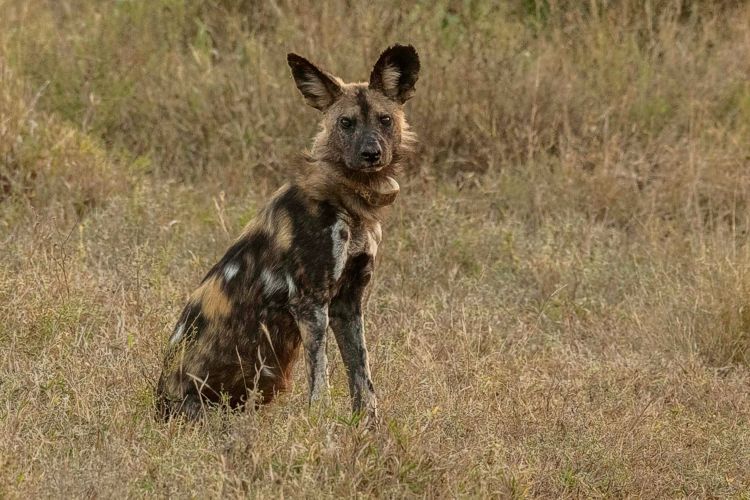
June sightings, wildlife monitoring and interesting research projects.`
Sightings of the month!
Thank you to all who recorded their sightings in the book this month!
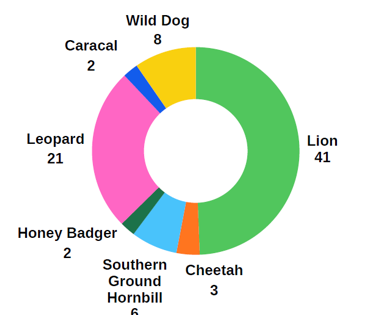
There were 225 recorded sightings in the sightings book, with an average of 7.5 sightings recorded per day. Here is the number of recorded sightings of a few species during the month:
Highlights:
- Lion sightings once again represented the most frequently recorded species, closely followed by elephants, buffaloes and leopards. Both lion prides were seen during the month, with regular sightings of the Western Pride with five cubs.
- There were six sightings of mating lions throughout the month, while a spectacular interaction was witnessed between lion and leopard: three lionesses were observed chasing a leopard up a tree at Serengeti Plains! Luckily, all seemed to escape unharmed.
- The leopard with two young cubs were seen in camp, on Argyle, and on Buffelsbed throughout the month, and it seems that another female leopard has been spending time with them! She has been seen with them before, when they were first discovered, but in that sighting all four leopards were crossing the road together.
- There were three sightings of a female cheetah during the month!
- There were once again multiple caracal sightings on Buffelsbed, while other rarities included sightings of an aardvark, a porcupine, honey badgers, and wild cats. Out of interest, the aardvark was once again seen on Buffels Eastern Boundary Road in the early evening.
- Birding highlights included a sighting of a Shikra eating a small bird caught on the road, two Hamerkops building a nest on Argyle, a juvenile Black-crowned Night Heron, and three sightings of Martial Eagles.
- Reptilian highlights included a sighting of an estimated 4-5m python crossing the road near Motswari Corner, and a particularly large Snouted Cobra seen in camp. A sizeable Black Mamba was also safely captured and relocated from the roof of a bungalow!
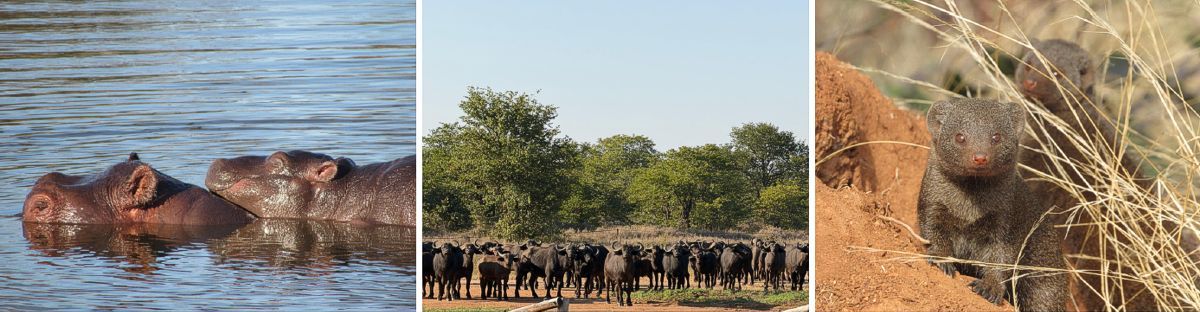 Images courtesy of Aimee Langenhoven
- Mammalian species recorded: Cheetah, Leopard, Lion, Elephant, Buffalo, Wild Dog, Spotted Hyena, African Wild Cat, Caracal, Honey Badger, Black-backed Jackal, Side-striped Jackal, Porcupine, Lesser Galago, Impala, Kudu, Wildebeest, Giraffe, Zebra, Waterbuck, Warthog, Hippo, Nyala, Bushbuck, Klipspringer, Duiker, Steenbok, Warthog, Chacma Baboon, Vervet Monkey, Springhare, Scrub Hare, Tree Squirrel, Banded Mongoose, Slender Mongoose, and Dwarf Mongoose.
- Reptilian species recorded: Water Monitor, Black Mamba, Mozambique Spitting Cobra, Boomslang, Southern African Python, Spotted Bush Snake, Yellow-bellied Sand Snake, Nile Crocodile, Flap-necked Chameleon, Leopard Tortoise, Marsh Terrapin, Rainbow Skink, and Serrated Hinged Terrapin.
- For the full list of bird species recorded during the month, please click here.
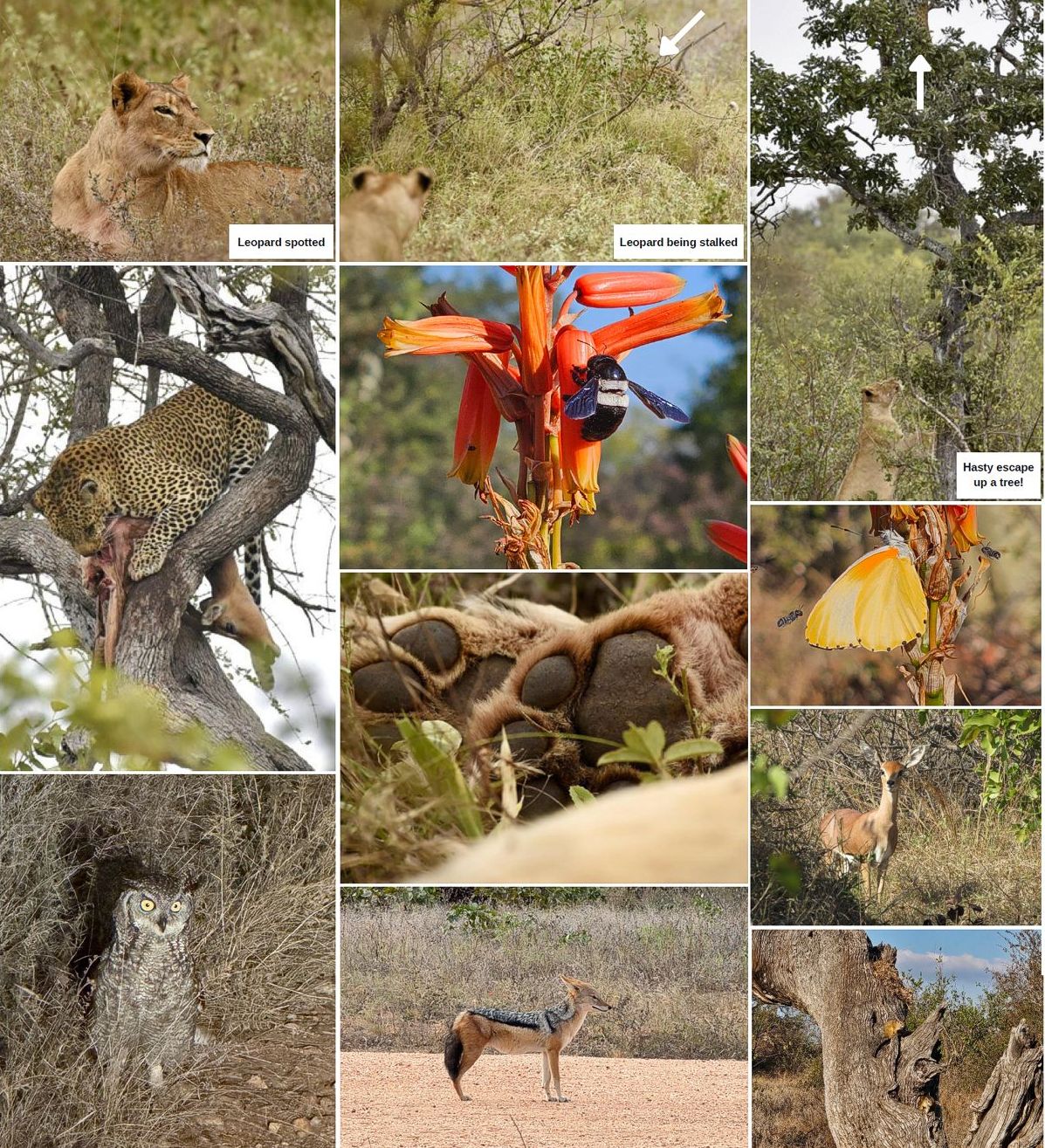 Images courtesy of Derek King, Aimee Langenhoven and Tessa Woollgar
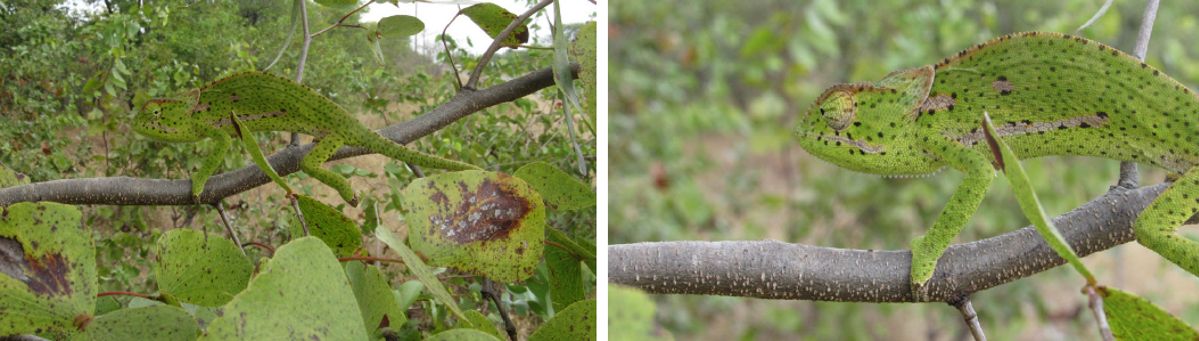 Images courtesy of Josh Hibbett, Tessa Woollgar and Aimee Langenhoven
Aardvark study
Members may have noticed the presence of trail cameras at larger road intersections, near termite mounds or active burrows, or scattered around the reserve. These cameras form part of the conservation interns’ animal studies projects, with the aim of hopefully capturing footage of some of the rarer species at Ingwelala.
There has been a noticeable increase in tracks and signs, and sightings of aardvarks by Members, during the past two years. As part of this project, one of the interns is compiling historical data specifically from aardvark sightings, combining that with current sightings, and looking for “hotspots” where aardvarks are likely to be found at Ingwelala. There are specific trail cameras that are set up in areas where active burrows are found, or where tracks and signs, or “hotspots”, indicate there is a likelihood of aardvark activity - all to try to understand aardvark distribution and movements better.
This study, if successful, will hopefully be able to indicate where aardvarks are most likely to be seen, at what times of the year, and whether there are peak times of sightings or movement. This could also potentially be used to develop an estimate of potential population size. Should any Member wish to assist by sharing images and details of any past aardvark sightings, please contact the conservation team via email at
Thank you to all Members who continue to report or record sightings.
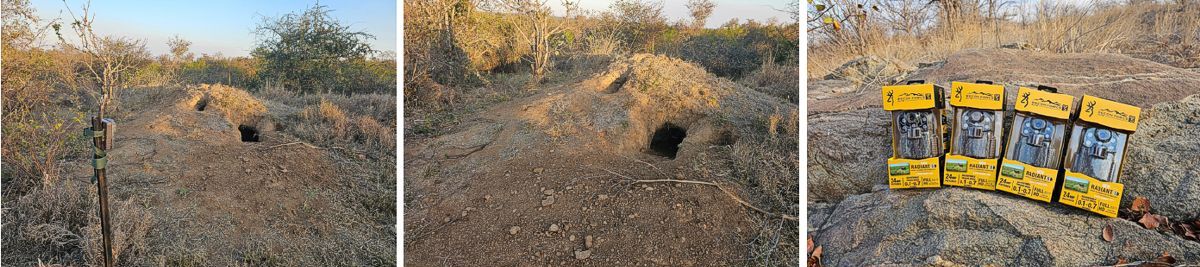 Images courtesy of Tessa Woollgar
Words by Tess Woollgar. Images courtesy of Ingrid Passier, and as noted on individual photos or sets of photos.