


March sightings, wildlife monitoring and interesting research projects.`
Sightings of the month
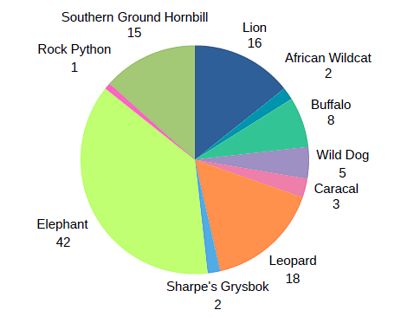
Thank you to all who recorded their sightings in the book this month! Here is the number of recorded sightings per major species:
Highlights
- Lion and Leopard sightings made up 22% of the total species recorded, at a total of 16 lion sightings and 18 leopard sightings of 153 recorded sightings in the book.
- An African Wildcat with a kitten, and a caracal with a kitten, were both recorded twice.
- A mammalian highlight was a special visit from a honey badger and a hyena while some of our members were at Beacon Boma. According to the book, “Fun & games ensued!”.
- A klipspringer was seen ambling past the swimming pool at Reception.
- Recorded Southern Ground Hornbill sightings have remained quite high, with 15 recorded sightings totalling 58 birds.
- Bird species recorded: Little Sparrowhawk, Verreaux’s Eagle-Owl, Southern Carmine Bee-eater, Pearl-spotted Owlet, Dusky Lark, Dark Chanting Goshawk, Tawny Eagle, African Hawk-Eagle, Brown Snake Eagle, Black-chested Snake Eagle, Saddle-billed Stork, Woolly-necked Stork, Brown-headed Parrot, African Fish Eagle, Spotted Eagle-Owl and Dusky Indigobird.
- Reptilian highlights: Rock Monitor, Nile Crocodile, Leopard Tortoise, Rock Python, Yellow-bellied Sand Snake, Rhombic Egg-eater, Black Mamba, Flap-necked Chameleon, Giant Plated Lizard, Serrated Hinged Terrapin, Puffadder and Mozambique Spitting Cobra.
- Other general species recorded through the month: Impala, Kudu, Wildebeest, Giraffe, Zebra, Waterbuck, Hippo, Nyala, Bushbuck, Sharpe’s Grysbok, Klipspringer, Spotted Hyena, Black-backed Jackal, Honey Badger, Duiker, Steenbok, Warthog, Chacma Baboon, Vervet Monkey, Scrub Hare, Tree Squirrel, Springhare, Dwarf Mongoose, Banded Mongoose, Slender Mongoose and Small-spotted Genet.
Southern Ground-Hornbill Update
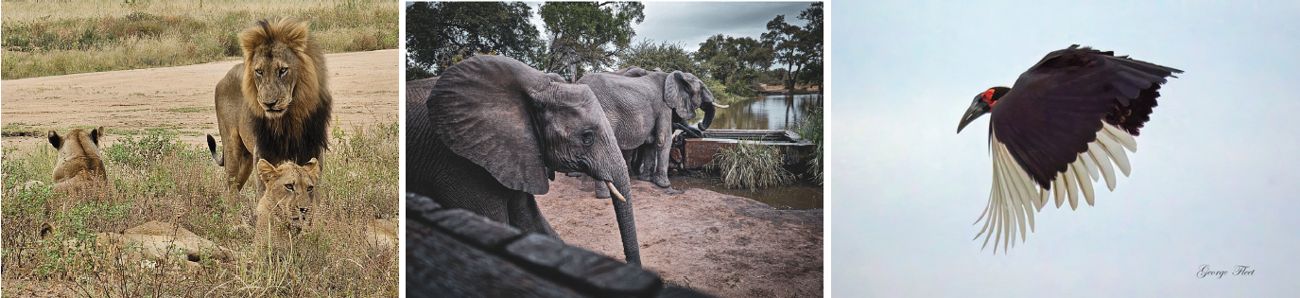
March seemed to be the month of productive sightings when it came to Southern Ground-Hornbills on Ingwelala. On that note, we have a particularly exciting update: the chick on Ingwelala has fledged successfully! This is even more special, considering there are very few known successful natural nests in the entire area, and with the small size of this nest!
Throughout the month, there were multiple sightings recorded, on Argyle, of 4 adult birds accompanied by a young juvenile. This has proven to be the family of birds we have been monitoring, including the newly fledged chick we successfully ringed in February. If you’re looking for the ring number/identity, it is a green metal tag labelled BL2, on the right leg.
Fledging is a particularly difficult time for any bird, but especially for Southern Ground-Hornbills. In fact, the first few months are crucial, and can be incredibly difficult for the fledgling to survive. According to Roberts Birds of Southern Africa, on average, only 31% of fledged Ground-Hornbill chicks will survive to adulthood. This is largely due to predation and the long stage needed for fully maturing in this species, which takes years.
We will be monitoring them as best we can, but we’ll need your help for this! If you see any Ground-Hornbills, please let us know as soon as you can on the radio or report your sighting in the book at reception. You can also email us at
For a guide on this, please ask us and we’ll gladly send it. Thank you!
Reminders from the Conservation Team
As you may know, we are actively working on a few different projects involving some key species on Ingwelala. We are working with the APNR Ground-Hornbill Project and the EWT to assist them with tracking and monitoring Southern Ground Hornbills and Wild Dogs in the area, and we like to give them as much information as possible to assist.
If you have any photos of any of these animals that might help, please send them in with the location, date, and time so that we can forward them on to the teams running those projects. We are looking for any photos that show markings, sex, and age, and for the birds, rings.
We are also still working on identification kits for the lions and leopards in the area, so photos of any of those with any relevant information would also be greatly appreciated.
Thank you to everyone who has assisted us so far! We are so grateful for your help and input. Please don’t stop sending them in - these are all long-term, ongoing projects that we want to stay up to date with, so don’t be shy to send as many as you have or can.
Lastly, please be aware of the Vervet Monkeys in the carpark at Reception. They have been raiding vehicles recently, so please don’t leave any food items or valuables in your open vehicles - the monkeys will find them! Thank you!
Words by Tess Woollgar, images courtesy of Tess Woollgar, Josh Hibbett, George Fleet & Ingrid Passier.