


December sightings, wildlife monitoring and interesting research projects.`
Sightings of the month
Thank you to all who recorded their sightings this month! We had 96 recorded sightings in the book, with an average of 3 per day. The number of sightings of some species is below:

Highlights:
- Lion and leopard sightings have dominated the chart this month, taking up 42 of the recorded 96 sightings in the book at reception - that’s a whopping 43.75%!
- There were many sightings of Southern Ground Hornbills over the month. Multiple of these sightings were at Wahlberg’s and First Crossing - please keep an eye out for potential nests!
- Big buffalo herds of 100-300+ were recorded multiple times.
- Bird sightings have been varied, including sightings of Levaillant’s Cuckoo, Saddle-billed Stork, Yellow-billed Stork, Woolly-necked Stork, Magpie Shrike and Violet-backed Starling.
- Two Kori Bustard sightings were a massive highlight near Buffels Hide!
- A Sharpe’s Grysbok on Argyle was a small mammal highlight, and a first ever for our intern Christine Wagner.
- A Lesser Galago (Bushbaby) was spotted too!
- Special mention must be made of 4 very interesting sightings: Santa Clause on Argyle Road, a herd of Reindeer crossing the Ingwelala Airstrip, Santa’s sleigh marks at Bungalow #160 and the Grinch on Ingwelala Drive!
- Other species recorded throughout the month: Black-backed Jackal, Side-striped Jackal, Elephant, Spotted Hyena, Black Mamba, Spotted Bush Snake, Puff Adder, Kudu, Waterbuck, Zebra, Giraffe, Nyala, Tree Squirrel, Chacma Baboon, Vervet Monkey, Impala, Steenbok, Duiker, Klipspringer, Scrub Hare, Springhare, Leopard Tortoise, Flap-necked Chameleon, Crocodile, Hippopotamus.
Earth Ranger
As you know, we have become more involved in the movements and identification of different animals in camp and on the reserve. Thank you to those who have assisted us with photos and identifications of the different animals! Please keep them coming in.
We’ve recently started using a platform called EarthRanger, a framework designed to help us keep track of which species are on the reserve, monitor individual animals and their movements, and have a better overall idea of what is happening over time. It also allows us to monitor sick/injured animals, animals that may be snared, or even invasive plant infestations.
This is an incredibly helpful tool which will allow us to keep track of what we can do ecologically on the reserve to keep it as pristine as possible and to keep everyone up-to-date on the happenings and movements of the animals we see. Over the past month, we have logged 80 sightings onto the platform, most of which have been Wild Dogs, Leopards, Lions, Southern Ground Hornbills and invasive plants (Queen of the Night, Prickly Pear and Mexican Poppy).
FAQ’s:
How are you collecting all the data?
We are combining sightings called in on the radio with logged sightings in the book at reception, sightings posted on the Ingwelala Facebook group, and sightings reported to us.
What information do you need?
We use a variety of information from each sighting: the time and date, location (GPS pins if we have them), number of animals, sexes, ages and any activity they may have been doing. Photos and/or videos are also kept on file to assist with identifying different individuals so we can track territory sizes and movements of different animals.
How can I get involved?
Log your sightings in the book at reception, call them in on the radio, pop them on the Facebook group, or send the Conservation Team an email with information. If you want to add photos or videos, please do! Be as accurate as you can with how many animals you have seen, if you can age/sex them you can include that and be as precise as you can when you give their location. If you can, take an offline pin on your phone’s mapping app and send it to us later.
Which species or reports are you looking for?
Alien plants such as Prickly Pear and Queen of the Night; Southern Ground Hornbill, Aardvark, Aardwolf, Black-backed Jackal, Brown Hyena, Bushpig, Caracal, Cheetah, Honey Badger, Kori Bustard, Leopard, Lion, Pangolin, Pel’s Fishing Owl, Sable, Sharpe’s Grysbok, Side-striped Jackal, Wild Dog; any injured animal or animal in poor health; any suspicious activity; snares.
For ageing and sexing guidelines for different species, pop us an email!
Migratory Bird Losses:
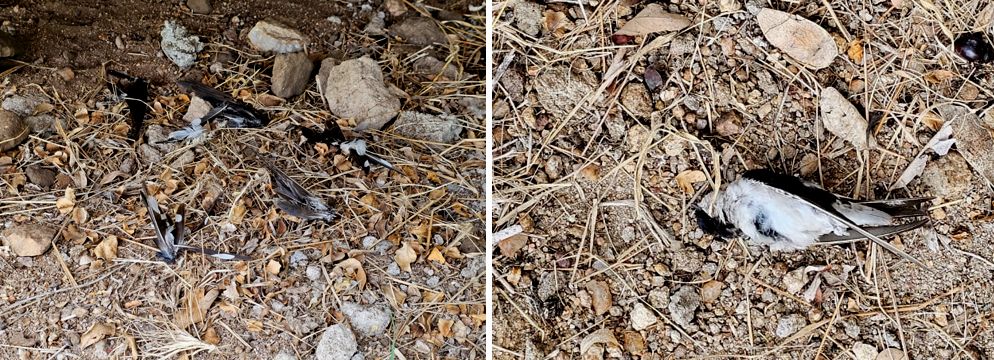
Over the course of 2023 it was noted that certain migratory bird species were dying off in large numbers across Southern Africa. This includes several Bee-eater, Swallow and Swift species, amongst others.
It is believed that as a result of climate change the birds are experiencing more severe weather conditions along their migratory routes. This has caused them to lose condition very quickly without being able to maintain or regain their condition during the migration.
The situation is actively being monitored by BirdLife SA, with cases being reported nationwide on an ongoing basis. On Ingwelala we have had 3 separate incidents of recorded mass House Martin deaths, all of which have been reported appropriately.
We ask that you please report any mass bird deaths to us as quickly as possible so that we can gather information and report the incidents timeously and thank you to the Members who have already done so.
Do Elephants use “Names”?
A recent study in Kenya revealed that African Savannah Elephants (Loxodonta africana) produce vocalisations/calls that are unique to specific individuals within their social groups - suggesting that elephants might use some form of “names” for each other!
Instead of just imitating a greeting vocalisation between individuals as other animals do, the elephants used calls specific to particular individuals within their social group - and the elephants responded to their unique calls when being communicated with, much like humans do. This could make them the first non-human species known to address each other verbally without just imitating the other’s call, distinguishing them from dolphins and parrots.
During the study, 625 elephant calls in the greater Samburu ecosystem (northern Kenya) and the Amboseli National Park (southern Kenya) were recorded. From this, rumbles specific to 119 elephants were identified and shown to be specific to individual “receivers” within the social group. Isn’t that fascinating?
We can’t wait to see what comes out of the further studies and research on this topic!
For the full published article with results, see: https://www.biorxiv.org/content/10.1101/2023.08.25.554872v1.full
Words by Tess Woollgar, images by Josh Hibbett and Ingrid Passier.