


As we move into the dry winter months, we have once again placed huge emphasis on fire safety and protection around the reserve and in camp.
This is of utmost importance this year, as the extended and high rainfall has resulted in a particularly high biomass, and as such a high fuel load. Firebreak clearing and protection includes not only fire safety around individual bungalows and infrastructure, but also for the entire camp as a whole and the reserve in general.
During the month of May, our focus areas for fire safety and protection were the manual clearing of biomass away from bungalows and infrastructure, the widening of boundary roads with other properties, the thinning out of vegetation close to the fence line and the burning of any stack-piled materials (mostly thatch) on the reserve, or close to camp.
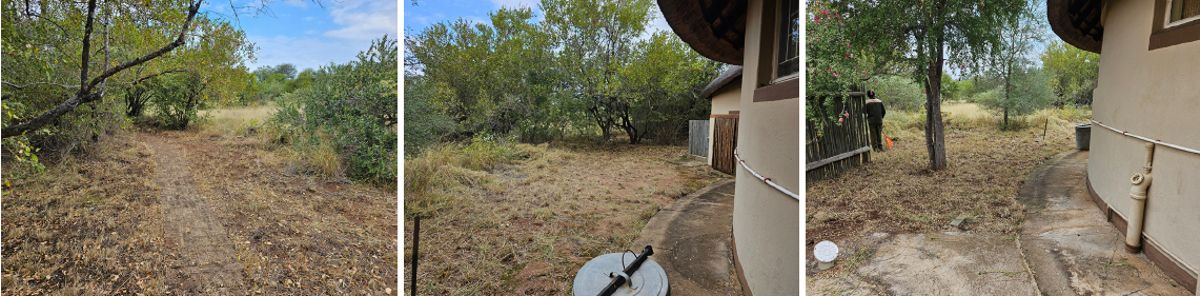
Manual firebreak clearing around bungalows and infrastructure has been going well, with over 120 bungalows having been cleared already, as well as all bomas, hides and viewing sites. This process involves the removal of any dead biomass (e.g. fallen leaves), the thinning out of vegetation around the bungalow and the mitigation of risk close to the thatched roofing (like branches hanging over or touching the roof).
This is done manually by the Conservation team, and we are very pleased with the progress so far. The remaining bungalows and other infrastructure will be cleared in the coming months.
To better protect the reserve from potential fires moving across from other properties, we will be clearing the boundary roads substantially, and in some cases widening them to act as firebreaks. As part of the Umbabat PNR’s strategy, the southern boundary of Argyle, where Timbavati Road West and Timbavati Road East are, has been widened between Timbavati PNR and the Umbabat PNR.
This was done manually by the TPNR team, using their bulldozer to widen the road. The final steps outstanding to complete this firebreak clearing include compacting the newly widened road with a heavy tyre, to settle the dust, and then clearing overhanging vegetation away from the sides of the road, which will be done by our Conservation team in the coming months. Thank you to the Timbavati PNR team for their incredible efforts in this regard!

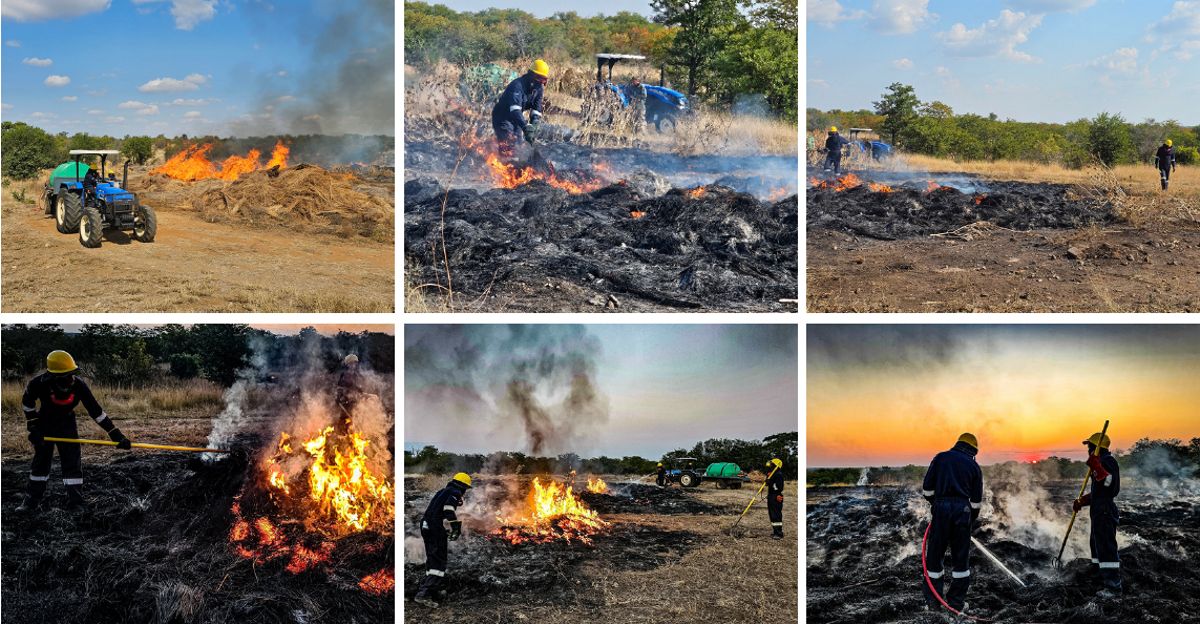
To further mitigate fire risks, the Conservation team spent a day, towards the end of May, burning stackpiled materials on the reserve. This consisted mostly of thatching materials and dead invasive plants that had dried out sufficiently to be burned. Our team had a long, fun-filled day performing the controlled burn, which is also always a great way to brush up on fire safety and firefighting skills and ensure the proper efficiency and use of all firefighting tools and equipment that we have available to us at Ingwelala. Burning went well and will become a more regular item on the agenda through the coming dry months.
We would like to thank the Conservation team for their incredible efforts in this regard, and for always being willing and excited to do something different and brush up on their skills. We would als o like to thank everyone that was in camp for their patience as we burned these materials, as we know the smoke blew over the camp a few times during the day.
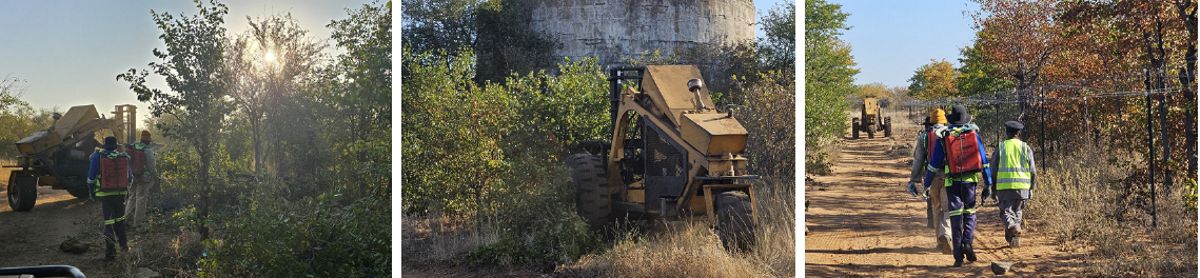
We have also begun thinning out a belt of vegetation along the inside and outside of the camp fence-line with the assistance of the veld rehabilitation team and their three-wheeler machine, to further mitigate fire risk in camp. During June we will be widening Fence Road wherever possible along the fence-line to add another layer of the firebreak for extra protection in camp. This will be achieved with the assistance of the heavy-duty grader that will be opening firebreaks across the UPNR.
Words by Tess Woollgar. Image courtesy of Tess Woollgar, Josh Hibbett & Wimpie Pretorius