


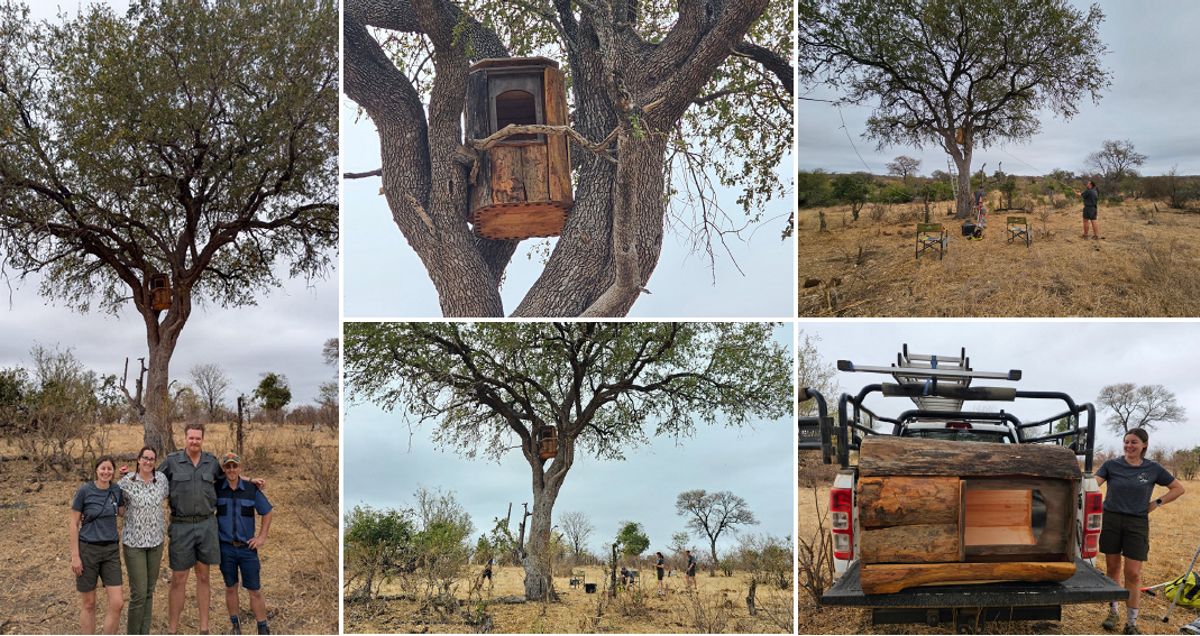
The APNR Ground Hornbill Project has installed the new artificial nest that was donated by Members, who have chosen to remain anonymous.
With great anticipation for the upcoming breeding season of the Southern Ground Hornbills, a large Leadwood tree along the banks of the Nhlaralumi River was chosen as an ideal location for the new artificial nest, and with the assistance of Ingwelala staff, the nest was installed successfully. The nest is on Buffelsbed, near Mermaid Crossing, and has been placed specifically to face away from the road. This has been done to encourage privacy for the birds, particularly when entering and exiting the nest, as they may be sensitive to nearby movement in those crucial moments. Further, the following considerations were considered:
- The nest has been placed an optimal distance from other existing nests in the greater area: research has shown that nests too close together will encourage competition and may cause birds to abandon their nests or leave the area altogether.
- The nest has been placed where the flocks of birds have been seen throughout the last few months, allowing them multiple options within their territories.
- The tree is large enough to be stable and provide as level and sturdy a base as possible, along with being a Leadwood tree to discourage elephant disturbance and damage.
The nest has been named “Mermaid Nambu” by the donors, meaning mermaid river nest, and is the first artificial nest installed for the APNR Ground Hornbill Project for this season. The APNR Ground Hornbill Project would like to extend their deep gratitude to the donors of the nest for making this a possibility, and the Ingwelala staff who assisted with the installation on the day.
While the use of the nest will be entirely up to the Southern Ground Hornbills in this area, we are appreciative to be part of this incredible opportunity, and hopeful that the Ground Hornbills of this area will have many successful years in this new nest.
Thank you to the APNR Ground Hornbill Project for their ongoing efforts towards the conservation of such a special species.
Words by Tess Woollgar. Images courtesy of Ingrid Passier, Carrie Hickman and Tessa Woollgar